
Support Your Local Artist
Whether her name is Euangelia or his is Babis, the artist next door deserves your attention.
The other day, over a glass of wine after a theater performance, I found myself in a lively discussion:
Banana or Creation?
What are we really buying when we pay for art?
The sale of Maurizio Cattelan’s infamous artwork Comedian—a banana duct-taped to a wall—for a staggering €6.2 million, reminds us of something fundamental about art: its elusive definition and the subjectivity of its value. This piece isn’t just a banana stuck with tape; it’s a provocative challenge that raises questions: What is art? Who decides its worth? Is it mainstream fame, or something more personal and collective?
Adding another layer of absurdity to the story is the fact that the Chinese-American entrepreneur who bought the artwork, Justin Sun, later… ate it! Yes, the €6.2 million banana ended up as a snack.
The Local Talent at Your Doorstep
Would Cattelan’s banana have received the same attention if it had been conceived by Babis from Kato Patissia or Euangellia from Petralona?
Absolutely not.
This is the reality many talented local artists face. Their art, brimming with ideas and inspiration, often remains in the shadows. But why not bring it into the light? What are we really buying when we invest in art? An idea, an emotion, a fresh perspective on the world.
Cost or Idea?
Art has always been a medium of communication, reflection, and questioning.
Art is not just decoration. It’s a way to communicate, reflect, and express. It can be a simple sketch or an elaborate sculpture—what matters is the story it tells.
In a world dominated by global markets and marketing, however, the spotlight often shifts away from authentic creation. This leads to phenomena like Cattelan’s banana, where value is determined by virality rather than substance.
From Bananas to Sculptures
But are we losing sight of the essence of art?
Shouldn’t we focus more on the artists in our neighborhoods—the creators who live and work alongside us? Supporting local artists is a move that can have multiple benefits. Think about it: just as we support our local football team, the neighborhood café, the corner store, or the local bookstore. This not only strengthens our community but also helps preserve the authenticity of art.
When Creation Challenges Us
By supporting local artists, we make room for new ideas, enrich cultural diversity, and build bridges of communication.
Art isn’t just for galleries or wealthy collectors—it’s for everyone. Every piece, every painting, every sculpture created by a local artist is a fragment of our collective identity. Without supporting these artists, we risk becoming victims of a globalized culture that often bows to market norms.
For All of Us
Do we want a world where our collective culture is defined by Gangnam Style, The Blair Witch Project, the Ice Bucket Challenge, or Black Friday?
A world where everyone, from Vietnam to Andorra and Miami to Sudan, supports Real Madrid and Barcelona? Or one where the players of the multicultural Umoja Juniors team from Kato Patissia or the Athletic Union of Petralona (once gracing the fields of the Second Division) have a thousand spectators cheering them on?
Value Beyond Records
The value of art isn’t measured solely in money.
It’s measured in the change it brings to our lives, in how it makes us think and feel. Not all of us may have the financial means to buy artworks, but we can support local artists in other ways—by attending their exhibitions, sharing their work on social media, or even purchasing smaller pieces.
The Banana Calls Us to Reflect
After all, none of us can compete with the sums billionaires spend at auctions.
Let’s support our local artists with amounts we can afford, while they’re still alive. Cattelan’s banana may seem funny, shocking, or thought-provoking.
In reality, no one cares about our personal opinions!
But beyond its viral nature, it invites us to rethink the value we place on art. And that value doesn’t need to be defined by record-breaking prices. By supporting local artists, we become part of the process that defines what creation is—and that might just be the greatest masterpiece of all.
More Examples of Provocative Creation
Here are a few more examples of works that, like Cattelan’s banana, went viral or sparked discussions about the meaning and value of art:
-
Marcel Duchamp’s “Fountain”
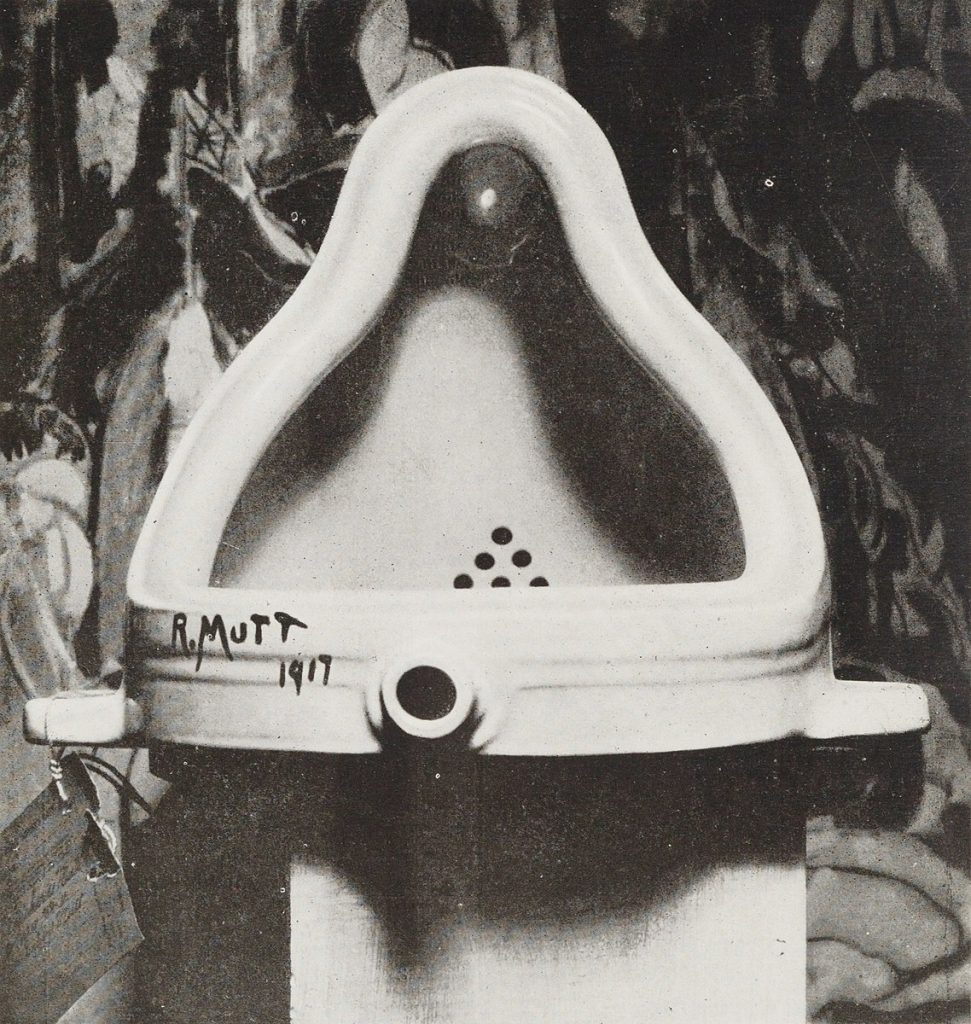
Fountain
Urinal “readymade” signed R. Mutt; early example of “Dada” art. A paradigmatic example of found-art. Photograph by Alfred Stieglitz. Captions read: “Fountain by R. Mutt, Photograph by Alfred Stieglitz, THE EXHIBIT REFUSED BY THE INDEPENDENTS”
Date: 1917
A urinal placed in a gallery in 1917, challenging traditional notions of art.
Credit: Wikimedia Commons
-
Yves Klein’s “Invisible Art”
Klein sold “invisible” artworks with receipts, highlighting the value of ideas.
-
Banksy’s Self-Destructing Artwork
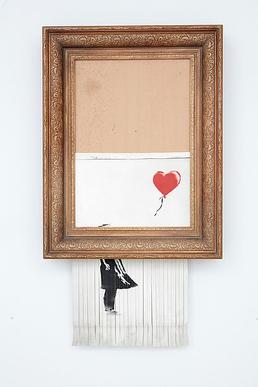
Banksy – Love is in the Bin (photograph by Sotheby’s) – Sotheby’s
A painting that shredded itself moments after being sold.
Credit: Wikimedia Commons
-
Tracey Emin’s “My Bed”
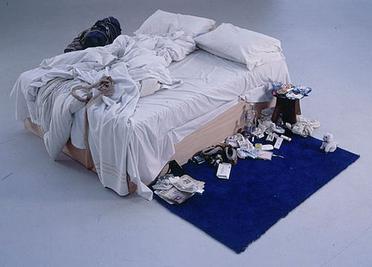
My Bed by Tracey Emin.
Retrieved from The Saatchi Gallery web site, 19 June 2007. Copyright of the work presumed to be that of the artist, and of the photo to be that of the Saatchi Gallery.
An unmade, messy bed displayed as an artwork.
-
Marina Abramović’s “The Artist is Present”
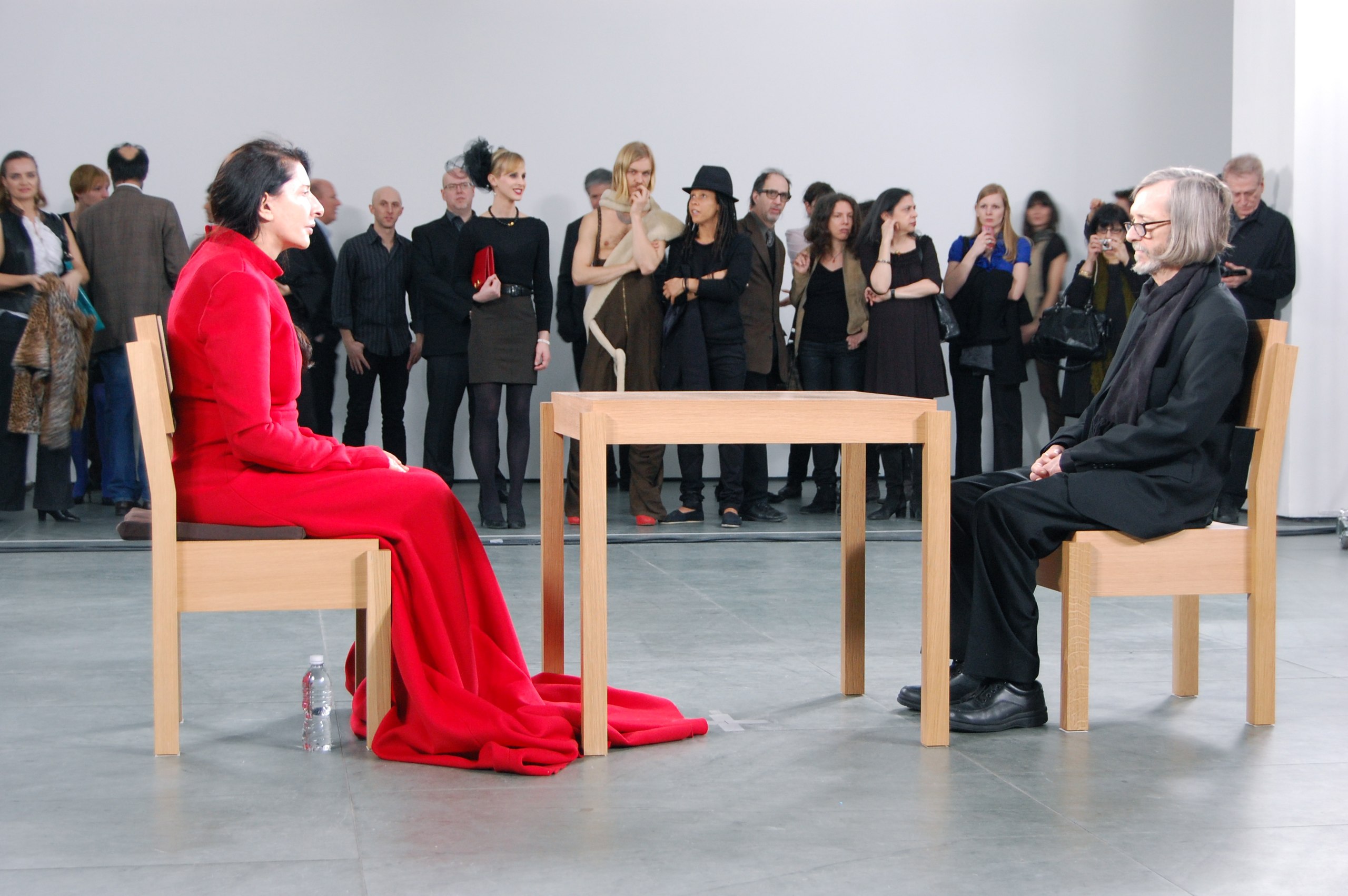
Marina Abramović, The Artist is Present, 2010, Museum of Modern Art, New York, 9 March – 31 May 2010.
Andrew Russeth – Flickr
A performance centered on human connection through mutual observation.
These works share a common thread: they challenge conventional ideas about art, sparking discussions and reactions that often transcend the creation itself.
So, let’s not forget the artists in our own neighborhoods. They may not have bananas duct-taped to walls, but their creations are just as worthy of our attention—and support.
Yours, Yanni