
Creative Greece: Culture Gets a New Stage
Contemporary culture in Greece is getting a fresh frame — and, this time, it comes with a name: Creative Greece.
Presented at the National Gallery in Athens, the programme is not just another funding announcement wrapped in official language. It feels more like an attempt to redraw the map of cultural support: clearer, more visible, more connected to the people and collectives who are actually shaping the country’s creative present.
With a budget of just over €8 million, Creative Greece is designed to support non-profit cultural organisations across a wide range of fields — from visual arts, theatre, cinema, music and dance to books, museums, digital culture, festivals, children’s programmes and accessibility initiatives for people with disabilities. But the most interesting part is not only the funding. It is the shift in tone.
For the first time, grants for contemporary culture are gathered under one recognisable identity, with their own name, visual language and digital portal. In other words, what once felt like a bureaucratic process now begins to resemble a cultural platform — a space where ideas, institutions, artists and communities can meet.
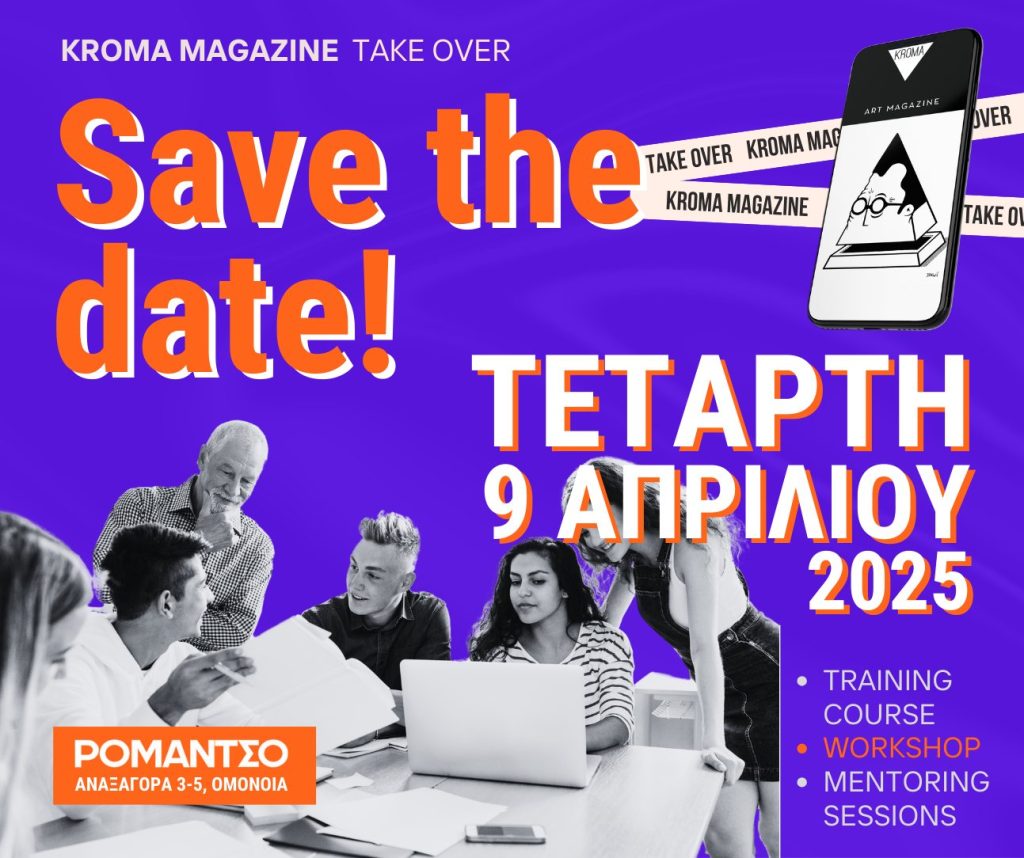
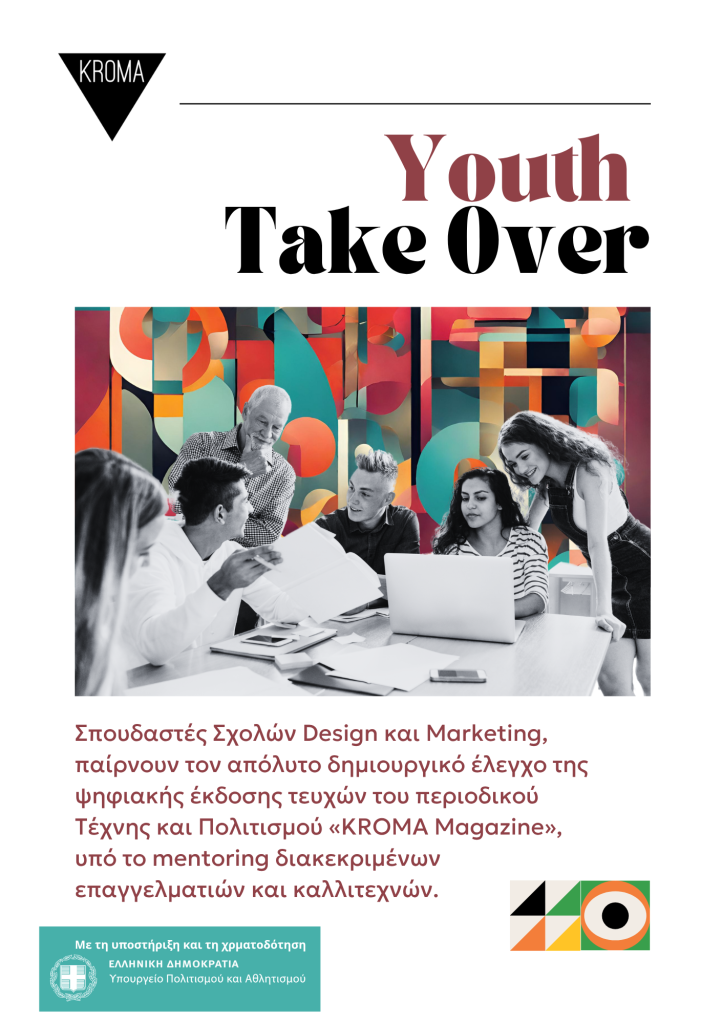
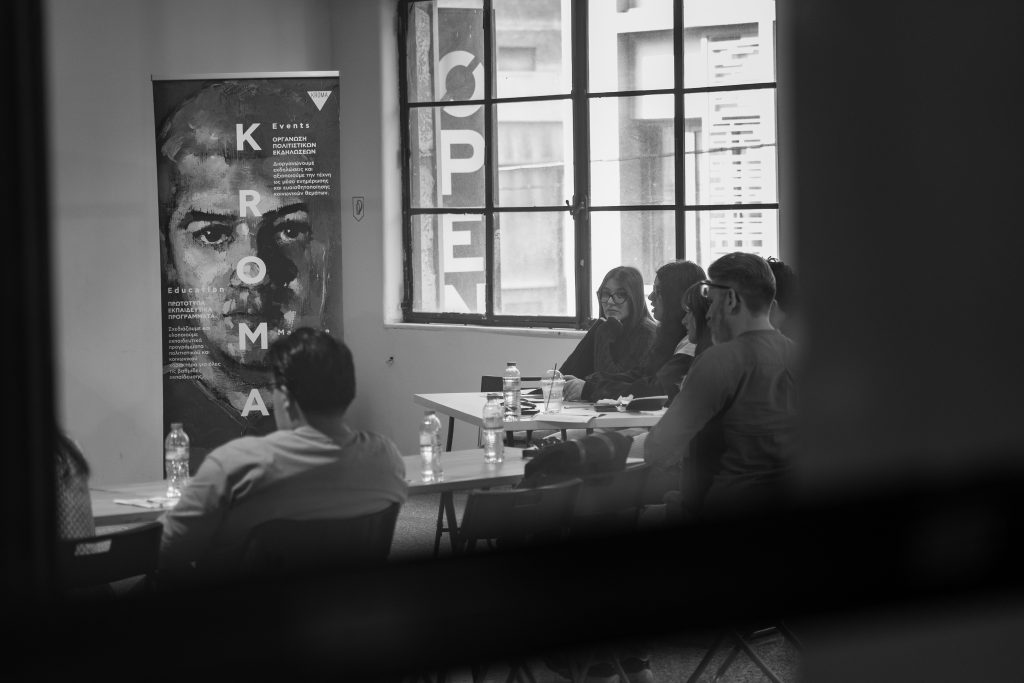
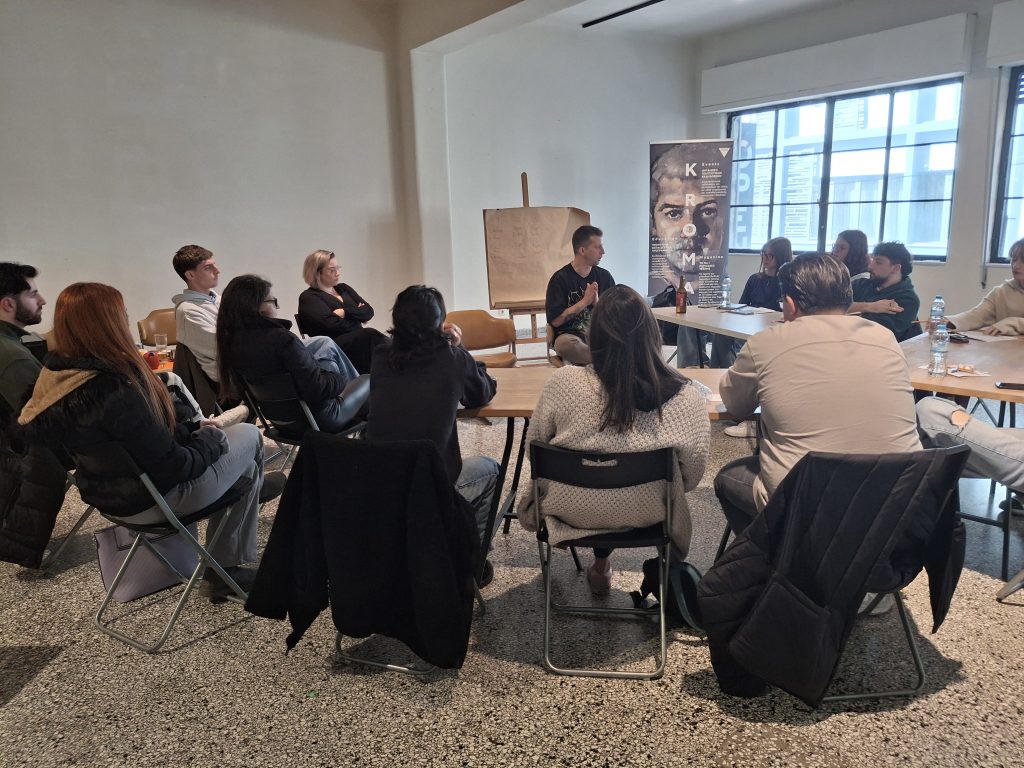
Among the initiatives aligned with this vision is Youth Take Over, a programme developed by KROMA Magazine that invites students from Design and Marketing schools to take part in the creation of the magazine’s digital editions. Through workshops, mentoring sessions and collaboration with professionals and the editorial team of KROMA, participants are encouraged to explore their creativity within a real production environment. The programme places strong emphasis on teamwork, communication and collective problem-solving, while also giving students the freedom to develop their own artistic voice and individual perspective.
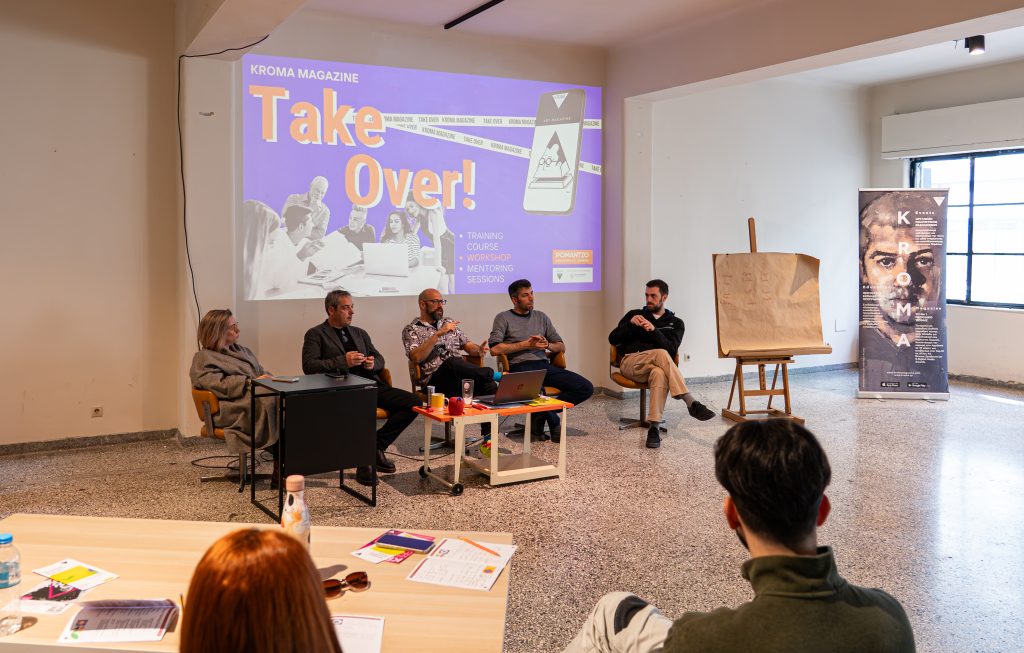
Supported within the framework of Creative Greece, Youth Take Over reflects the programme’s broader goal of empowering new generations of creators and strengthening contemporary cultural ecosystems through education, experimentation and collaboration. By connecting young creatives with active cultural production, the initiative transforms learning into hands-on experience and opens new pathways between artistic practice and professional development.
Creative Greece seems to understand that culture is not only what happens on stage, on screen or inside a museum. It is also the networks behind it: the small teams, independent spaces, regional initiatives, educators, curators, performers and producers who keep the creative ecosystem moving.
In that sense, this new initiative is less about distributing money and more about giving contemporary Greek culture a stronger public presence. It is an invitation to make artistic work more accessible, more visible and more alive — to turn support into momentum.
And perhaps that is the real promise of Creative Greece: not simply to fund culture, but to help it breathe louder.