
From Epidaurus to the Art Shelters
Six years later, a meeting of Greek and Ukrainian creators still echoes — even in times of war.
How a cultural program in Greece in 2019 became a lasting testimony of artistic resistance.
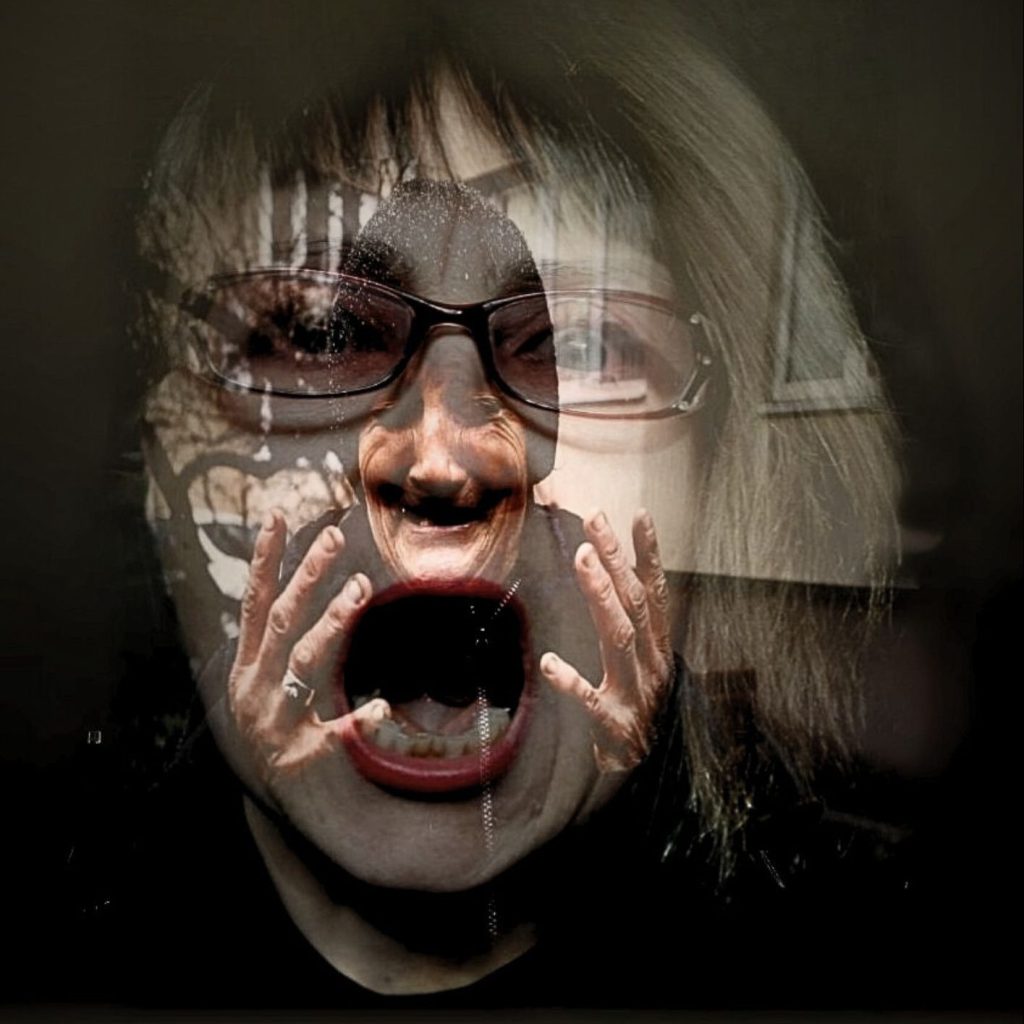
From the cycle “Ukrainian Golgotha”, 2022. © Oksana Chepelyk
In the summer of 2019, representatives of Ukrainian cultural organizations visited Greece as part of the Study Tour Creative Europe Ukraine program, under Culture Bridges, for training and the building of partnerships with Greek institutions. The visit included activities in Eleusis, attendance of Robert Wilson’s “Oedipus” at the Epidaurus Ancient Theatre, and meetings with Greek cultural organizations such as KROMA.
Participants of the Study Tour in Athens — a moment of unity in the eternal city.
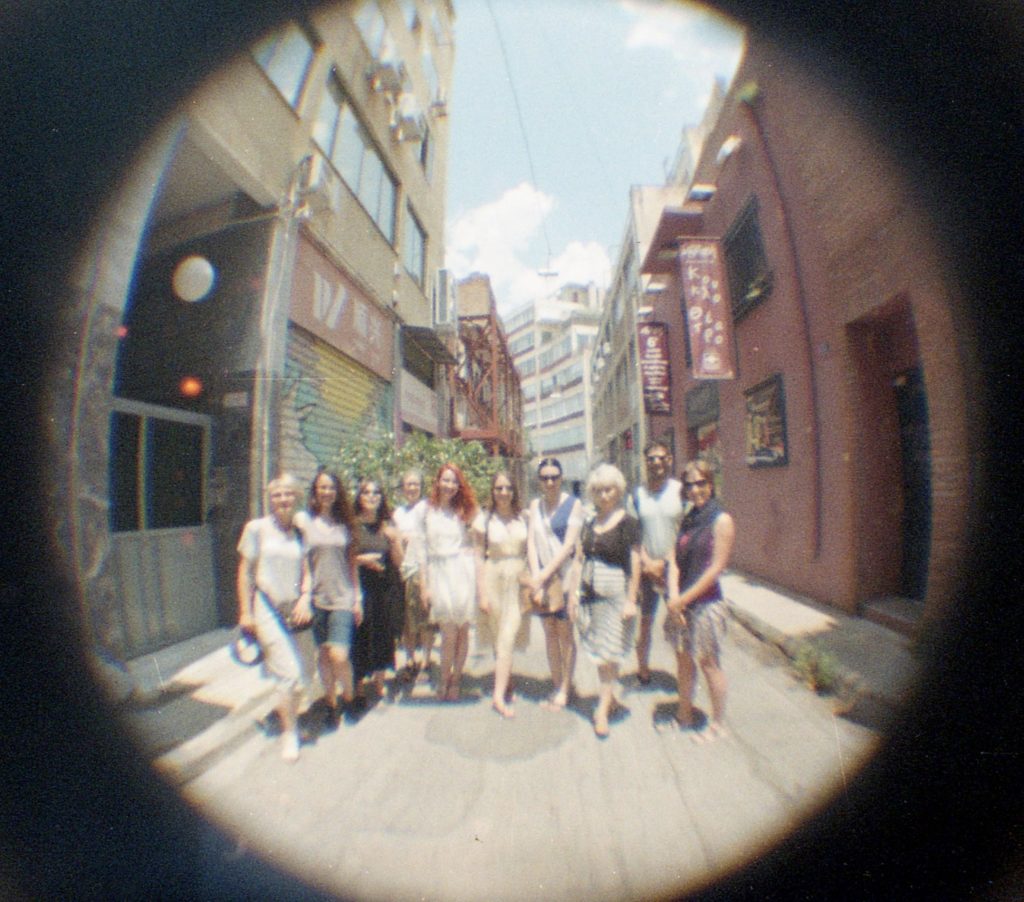
In just a few days, relationships were built that would withstand time — and the test of war.
On February 24, 2022, the day of Russia’s full-scale invasion of Ukraine, participants from Greece and Ukraine exchanged emotional messages filled with anxiety and care.
Since then, everyone’s life has changed.
Some found themselves on the frontlines.
Some remained silent.
Some continued to create — under unimaginable conditions.
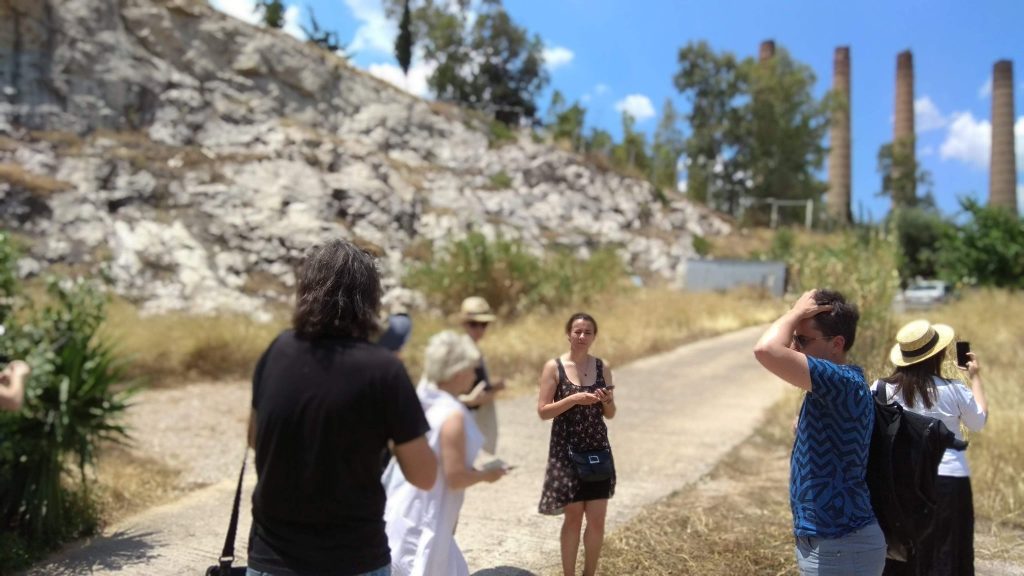
In Eleusis — where the shadows of the past become dialogue partners of the present.
This article gives voice to three women — Kristina, Inna, and Oksana — who continue, through art, to resist, to heal, and to tell stories.
Kristina Lu-Lu
The Power of Storytelling When Shared
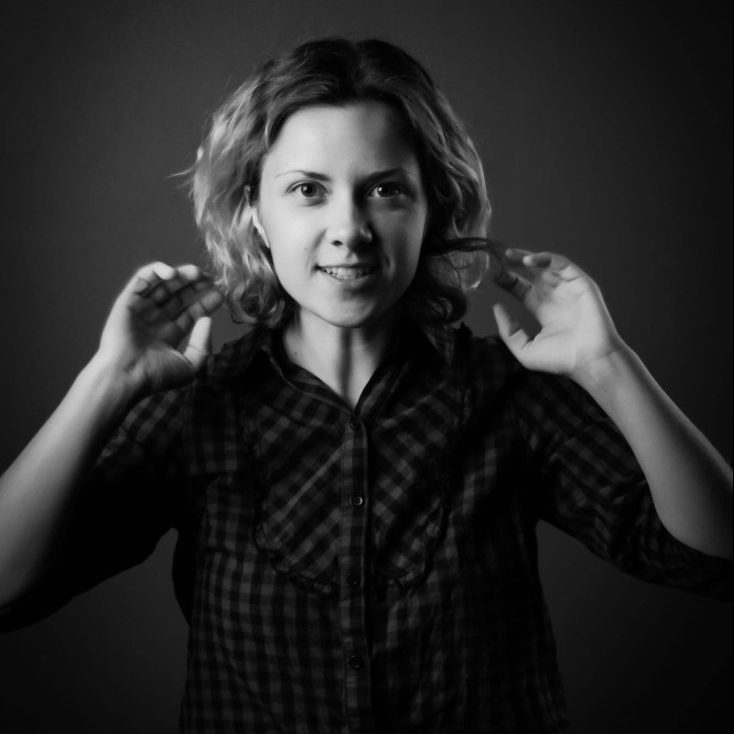
Khrystyna Lyulchenko – Artist. Director of theater and cinema. Head of a children’s film studio and curator of educational projects in the field of cinema.
“I moved from Crimea to mainland Ukraine after the 2014 occupation. That’s why the experience in Greece in 2019 had such emotional power for me. The stories I heard from artists there were similar to ours. How to survive, how to promote your theater or photography. In Greece, I felt like myself again.”
Kristina participated in the 2019 Study Tour as the co-founder of the Ukrainian NGO “Generation U”, with which she implements cultural projects that aim to tackle social issues through art. She recalls the exchanges with Greek and Ukrainian artists, the performances, and the conversations, as a unique landscape of dialogue.
“We shared stories and heard about each other’s struggles. That dialogue became a foundation for me — both as an artist and as an activist.”
After the 2022 invasion, everything changed.
“Our coordinates, our horizons, our points of reference — they all shifted. We knew it would be a long road, but now we understand it with every part of our being.”
Kristina did not stop working. On the contrary, she launched the “My Puppet Story Course”, an art therapy project using puppetry for children who have experienced war and displacement. The project was implemented both in Ukraine and abroad, including in Ireland.
“We used to have a base — a safe starting point. Now, we’re scattered around the world. We meet on Zoom, we plan remotely, we look for ways, we write proposals. If we don’t get funding, we still continue. This isn’t a project — it’s a necessity.”
She also takes part in cultural forums, designs new collaborations, and closely follows developments across Europe.
“Our art is not a luxury. It’s a tool for understanding. And the art therapy we do with children — it’s healing for us too. Not just for them.”
Kristina Lu-Lu in action, working with children affected by war. Through puppetry, they express fear, hope, and memory — and Kristina transforms each story into a gesture of healing.

Inna Burdeina
“We Stay Standing Through Dance”
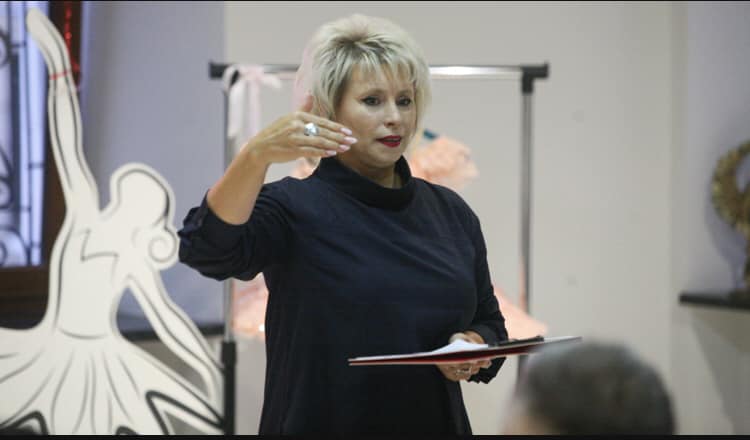
Inna Burdeina – Balletmaster, choreographer, educator. Founder of Avanté Ballet School.
“Along with the invasion on February 24, 2022, my work collapsed. I felt like I was drowning. I no longer had my life’s work — over 150 students, now scattered across the world. It felt like the air had disappeared.”
Inna participated in the 2019 Study Tour in Greece, where she shared her passion for culture and connected deeply with Greek art. The journey to Athens inspired her to dream of future collaborations with the Greek National Opera. But war altered everything.
When I messaged her for KROMA, she immediately recalled: the day the war began was the day her ballet school dissolved.
“It wasn’t just a job. It was my dream. My daily life. My mission.”
Soon after, she was invited to Slovakia by the Director of the Kyiv State Choreographic College, where conditions were created for refugee students to continue their classical and modern dance education.
“We went with faith and hope. But within a year, Slovakia’s political situation shifted dramatically. We had to return to Ukraine. We started over — under bombings, in shelters, with sirens and fear. But we continued. Dance was the only way we could stay standing.”
“We weren’t just working on technique or artistry. We were working to keep the children alive. Literally and metaphorically. And we drew strength from them.”
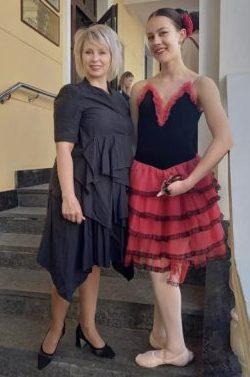
Today, Inna and her team in Zhytomyr focus on community and charity:
- Performances to support soldiers
- Charity events in hospitals and pediatric clinics
- International concerts in Poland and North Macedonia
- Fundraising and equipment donations for Pediatric Oncology
- Art therapy workshops for children living under daily stress
She also invests in highlighting Ukrainian identity through dance.
“The focus has shifted. What we do is no longer ‘just art’. It’s testimony. It’s a cultural archive. It’s an act of faith.”
One of her most moving projects was the International Choreographic Assembly in Zhytomyr — a ritual gathering featuring performances, children’s workshops, and fundraising for local hospitals and community institutions.
“The only part of the 2019 Study Tour that didn’t happen was the visit to the Greek National Opera and the meeting with the Ballet Director. That was my big dream. It still is.”
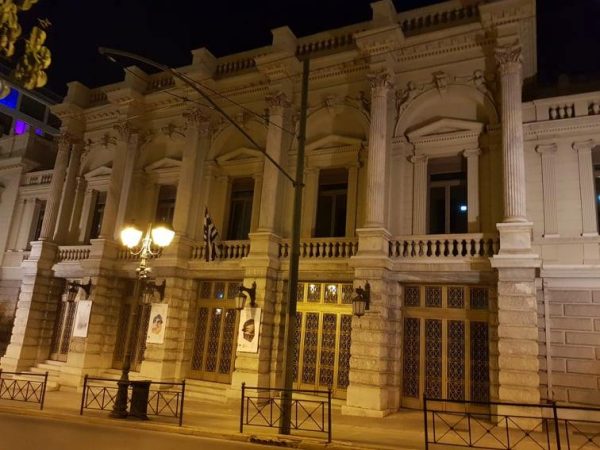
Inna envisions a joint performance by Greek and Ukrainian dancers at the Greek National Opera — a collaboration that brings patriotic choreography from the Ukrainian frontlines to the historical center of Athens.
“Only art can tell the truth about Ukraine. And only art can build bridges of peace.”
Oksana Chepelyk
“We Translate Resistance Through the Sensorial”
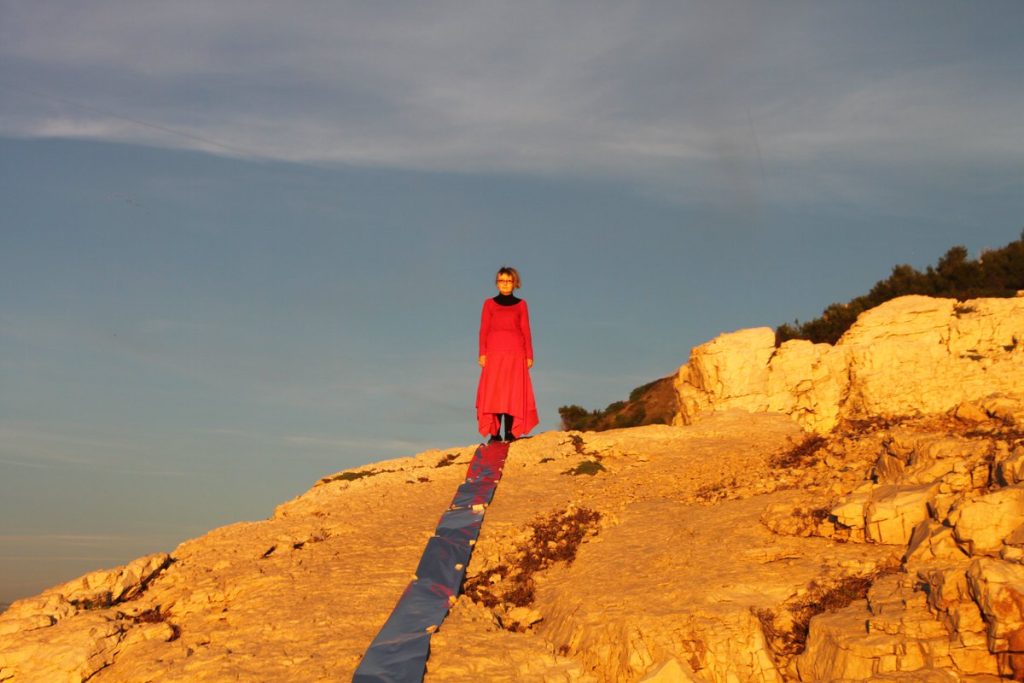
On the Edge. Oksana Chepelyk documents the war through the lens of art. With works that merge science, memory, and corporeality, she creates a “living archive of resistance” for voices threatened with erasure.
Oksana Chepelyk – Visual artist, researcher, and professor. Her works blend science, memory, and corporeality, creating a “living archive of resistance” for voices on the brink of erasure.
“When I arrived in Athens in 2019, I felt like I was touching eternity. I remember the Acropolis, the new museum, the sea in Eleusis, the Robert Wilson performance in Epidaurus. I didn’t know how defining this journey would become. All of it merged into an image of culture and resistance.”
Oksana and I first met during the Study Tour in Greece, and years later we reconnected through her thoughtful and poetic responses. Her voice bridges science, politics, and art.
“On February 24, 2022, I was in Kyiv. I had just finished the video Underwater Landscape for the Metabolomics project. At 5am, I heard the first explosions. The file’s timestamp marks the beginning of war — my first personal document of it.”
From that day forward, she became a “nomadic artist in resistance.”
She fled Kyiv with her son in the dark, crossing Ukraine by train to Budapest, then to Alsace, supported by the ACCR residency program. They eventually reached Iméra in Marseille, where a new chapter began.
“I changed. Not just places, but bodies. In 2024, I suffered a spinal injury. I was paralyzed for months. Wore a brace. Couldn’t move. I began making self-portraits — of myself as an astronaut floating over wounded cities.
I see my injury as a sign of deep connection to the wounded Ukrainian collective body.”
Her work explores war and trauma through scientific data, visual systems, VR, and memory. She calls her approach documentary performativity — a kind of artistic documentation with a performative layer.
“Today, I don’t just make art. I build a container for a new era — an ark for the invisible, the unburied children, the fading voices.
Over 652 children have been killed. More than 19,500 abducted.
Who will tell their story?”
Oksana has exhibited in Manifesta 14, Ars Electronica, OVNi Festival, with work shown at Musée Matisse and the Korsak Museum of Modern Ukrainian Art. She often uses mythological and post-mythological forms, like The Ocean or Ecocide, creating virtual landscapes that trace the biochemical collapse of oceans as a mirror of the climate crisis.
“Athena is strategic — the goddess of just war. In our case, it’s a war for liberation. Greeks know well the weight of liberation wars. It’s time to redefine peace and justice.
Medusa is more complex — traditionally seen as a monster, but I reinterpret her through an ecofeminist lens. The underwater species Gorgonias went extinct in 2022 due to climate change. Vulnerable species need protection in the 21st century.”
Despite her injury, she continues to work with international supporters such as PAUSE, A*MIDEX, FIAS, House of Europe, and the APF Award. She now participates in the European project “Crisis – Perspectives from the Humanities”, supported by CHANSE, HERA, and TELEMMe (Aix-Marseille University).
Her proposal is not just artistic — it is political:
To create an archive of cultural genocide.
A “living archive of resistance”, preserving the memories of communities under threat of extinction.
“Culture is a battlefield.
If we don’t save our memories,
we won’t save ourselves.”
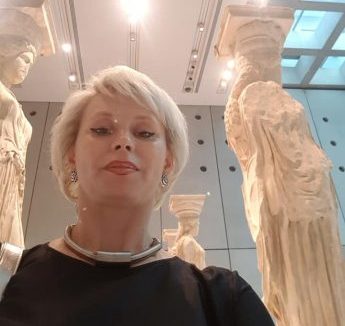
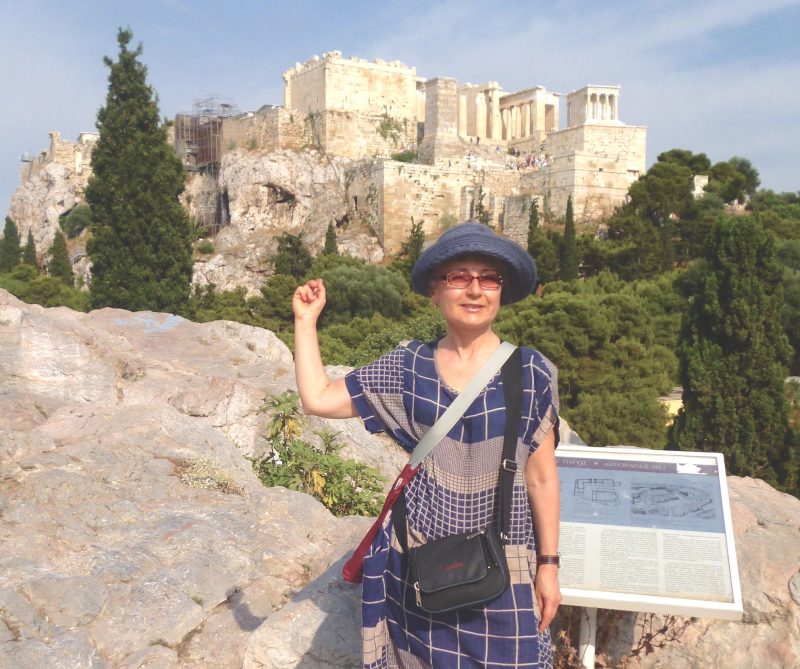
Oksana Chepelyk at the Acropolis, 2019 — a moment that, as she says, gave her the feeling of touching eternity. The image of Greek culture became for her a point of reference in both her personal and artistic resistance.
Oksana Chepelyk – Selected Works & Links
- Ukrainian Golgotha (2022): Watch on YouTube
- Catalogue “Metabolomics” (2022): PDF Link
- Catalogue “Espace Ocean” (2023): PDF Link
- Catalogue “TERRA-OCEAN” (2023): PDF Link
- Gaia – Video (2022): Watch
- Homage to Matisse (2022): Watch
- Kakhovka HPP Ecocide: Watch
- Underwater Landscape – teaser: Coming soon
From Dialogue to Silence: The Other Side of Testimony
In 2019, we began with dialogue.
In 2022, we faced violence.
In 2025, we continue to hold the threads of a cultural resistance that has not broken.
Kristina, Inna, Oksana — and others not included in this piece — are more than individual voices.
They represent a community of memory, of creation, and of persistence.
They spoke to us with truth, emotion, anger, and resolve.
Some could not — or chose not to — speak.
We respect that silence.
Because sometimes, silence is louder than voice.
However it was expressed — through performance, a puppet, a digital artwork, or a letter never sent — the testimony of Ukrainian artists is not merely personal.
It is collective.
And it is political.
In this age of instability, art is not a luxury.
It is resistance.
And as long as there are people who keep the flame of creativity alive,
there will be bridges —
between cultures,
between peoples,
between hearts.
Written by Yannis Spanoudis
Published in KROMA Magazine, September 13, 2025.
With the support of the European Union and the House of Europe, as part of the Cultural Journalism Exchange (Greece Edition), in collaboration with Chytomo.
